Irish Legends and Belfast Murals

IMG_1141

Amongst the various murals we were shown in Belfast were these two, standing near each other in Shankill. One shows the Irish hero, Cúchulainn. Apparently he regularly features on murals from both sides of the divide.

‘The image of Cú Chulainn is invoked by both Irish nationalists and Ulster unionists. Irish nationalists see him as the most important Celtic Irish hero, and thus he is important to their whole culture. By contrast, unionists see him as an Ulsterman defending the province from enemies to the south.

Like all Irish folk I know the legend of Cúchulainn from my schooldays; the story of the how the Red Hand became the symbol of Ulster (on the other hand) was new to me. Our taxi driver/guide told us that there are many versions but they all involve a race between two boats.

The boats are racing for the leadership of the province of Ulster -whoever  touches land first will win.  As one boat draws in front the captain of the second ship draws his sword, chops off his own hand and throws it to shore, thus becoming (with his blood -red hand) the first to touch land.

IMG_1140

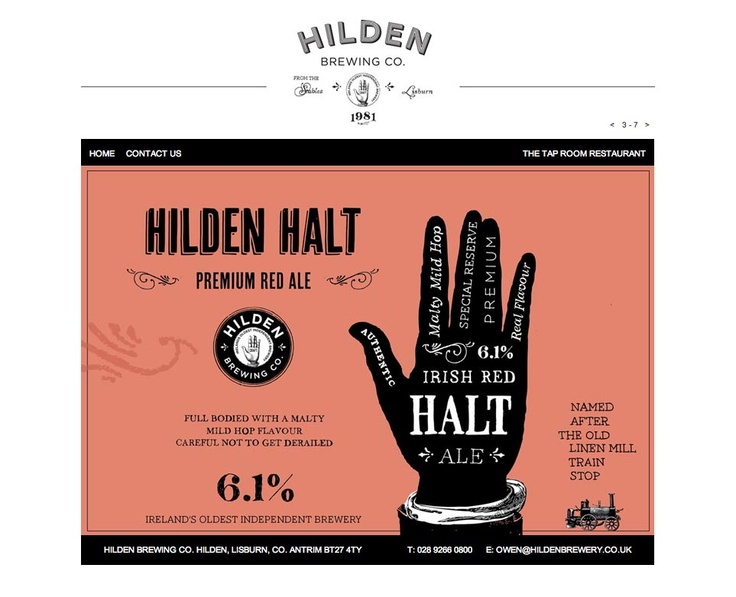
The end of every row of houses in this Unionist estate are painted. You can see how imposing the murals are – look how tiny Michael is beside that hand. The hand turns up on everything, including Belfast beer!

3302f5653237926ffc3a11376ccbedf1

Re-booking

Bray-recycling1

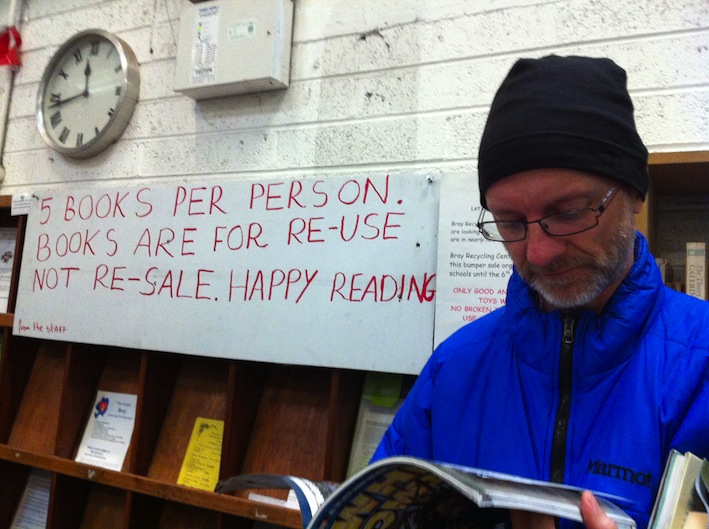
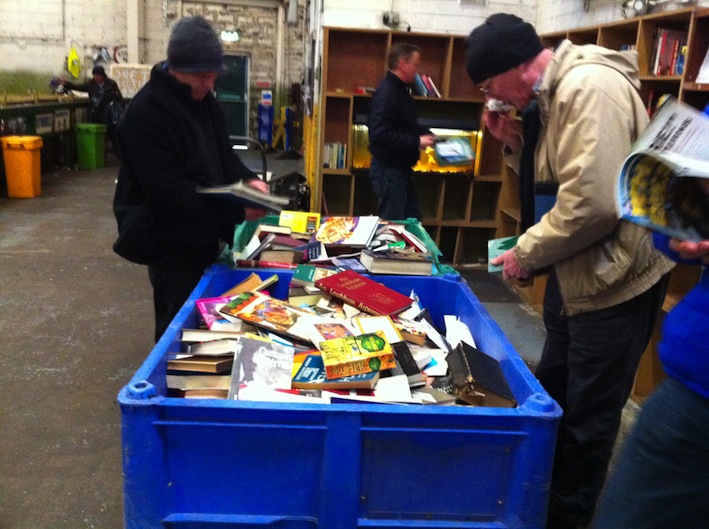
Our local recycling centre takes plastic, paper, glass, tins, clothes…and books. It’s always obvious when someone has deposited a whole bookcase worth at once – stacks of similar titles/books by the same authors suddenly appear. This time there was a heap of lives of the saints. I did find a book I fancy reading – A Thousand Days in Tuscany – described by one reviewer as ‘an object lesson in living fully from a genuine sensualist unabashed by her emotions’, so I’m guessing it didn’t once share shelf-space with the Life of Saint Rita.

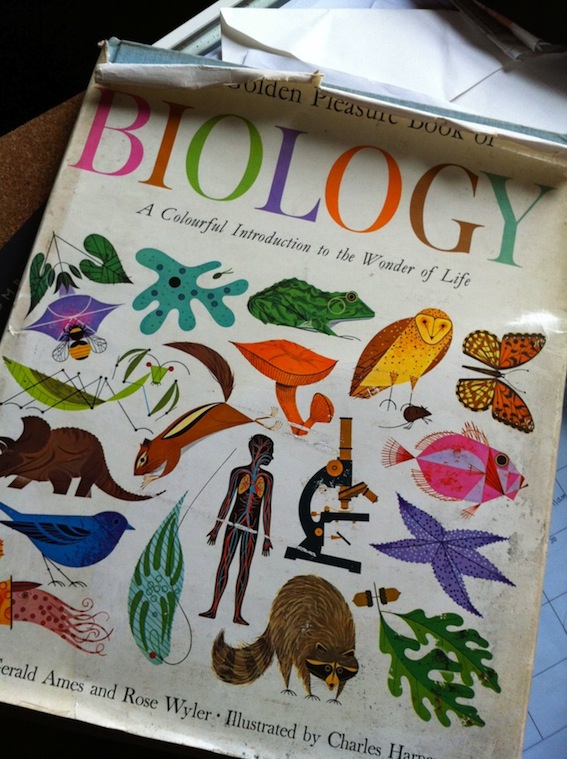
Last month Michael found Charley Harper’s Golden Book of BIOLOGY. According to the inscription inside it’s a copy someone won as 1st prize for something in Gonzaga College back in 1964. It has that old book smell and the dust jacket is scruffy, but this is a classic from an extraordinary illustrator. It is considered by many to be:

‘a masterpiece – the quintessential mid-century children’s science text. It is widely seen as (Charley Harper’s) magnum illustratus and has been widely influential to two generations of illustrators and designers. Todd Oldham described it as “…one of my favorite things I’ve ever had in my life,” and the illustrator Jacob Weinstein as “the world’s most attractive textbook.”’


Bray-recycling3One person’s recycling, our idea of real treasure! Link to article/illustrations from the book

Bray-recycling2

Coming to terms with the terms

DBG047

“When are we going to visit “The North”?

Something I’ve been asking for 5 years now. Well, last month, we went. Mel and I finally drove 3 hours or so up to Belfast. While there, we took one of the “Black Taxi Tours”. These are given by taxi drivers, in their taxis, traditionally black in colour, hence the name. The primary thing they take you to see are murals painted on buildings and walls in west Belfast, the area of most of the fighting during the worst of the ongoing war known as the “Troubles”. The murals are not amazing in their own right, but a useful jumping off point to discuss and try to explain the history to outsiders.

“The Troubles.” Sigh. This expression is just the first hurdle of tackling the complexities of talking about Belfast and Northern Ireland. It’s an inadequate, understated name for what has been, off and on, a long, emotional, often violent conflict over who should rule the northeast part of the Irish island, called Northern Ireland. And coming to terms with the terms is just the beginning.

Here’s the basics (primarily for Americans):

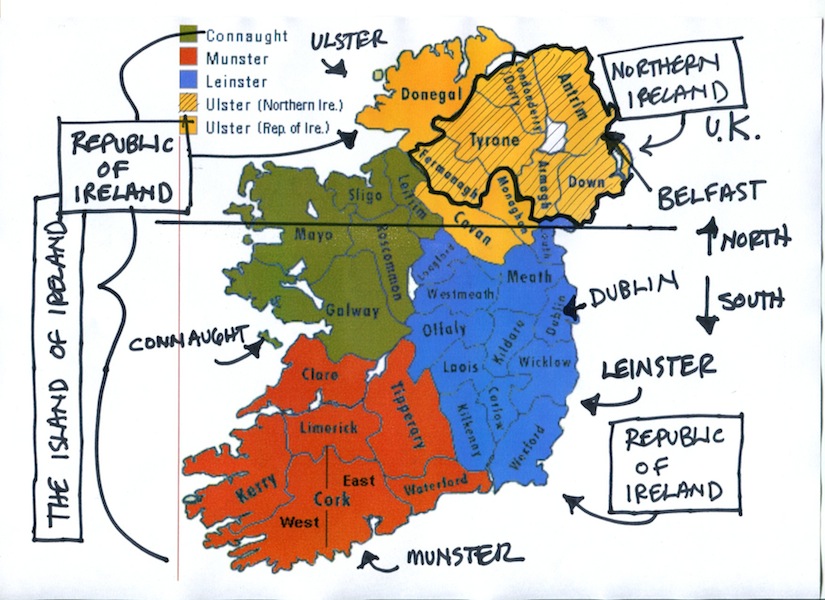
The Irish Republic, ROI, Republic of Ireland, the South, or just plain Ireland:

This is where I live. With Dublin as its capital, it is an independent country, part of the EU, and what most people think of as “Ireland”, but Not part of the United Kingdom, and definitely Not part of the “British Isles”. Uses the Euro for money.

People from The Republic of Ireland call themselves Irish.

Northern Ireland:

Much smaller land-wise than the south, and part of the “nation” known as the United Kingdom or Great Britain, along with Wales, Scotland, and England. Also in the EU, but, to confuse things, like the rest of the United Kingdom, uses British Sterling for money, other wise known as the “Pound”.

Someone from Northern Ireland could be called, or call themselves, British, Northern Irish, or just Irish.

The Island of Ireland:

This is the island itself, the geographic landmass surrounded by the Atlantic Ocean to the west, the Celtic Sea to the south, and the Irish Sea to the east. Comprised of both The Republic of Ireland and Northern Ireland.

The North:

Anything in Ulster, the northern part of the Irish Island, but specifically Northern Ireland.

Ulster:

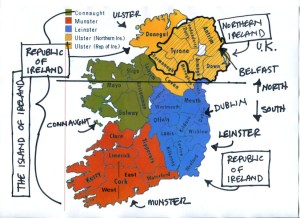
The northern part of the Irish Island, one of 4 ancient provinces of Ireland, along with Leinster, Munster, and Connacht.

Most confusing – All of Northern Ireland is part of Ulster, but Ulster is not all Northern Ireland… Ulster also includes 3 Irish Republic counties – Monaghan, Cavan and Donegal. So this Irish province has two countries with two currencies…

So, to be as clear as mud, most of Donegal (part of The South) is further north than what’s referred to as The North, or Northern Ireland.

And anyone from the Island of Ireland, would generally just be called “Irish”. If someone becomes famous for something, no matter which side they are from, then they are definitely, Irish.

Famous actor Kenneth Brannagh for instance. He is from Northern Ireland. So here he is definitely Irish rather than British. But, naturally, in England, he is clearly British. Northern Irish golfer Rory McIlroy prefers to be called British, but English actor Daniel Day Lewis, (who spent a lot if his life in Ireland and lives close by) is practically Irish.

The complexities that show up in sport are enlightening. In most sports, like the Olympics, the Northern Irish can play for the all powerful British team, but in World Cup Soccer, tiny Northern Ireland, with it’s 1.8 million people, must compete against the rest of the world, including 50 million strong England. In professional rugby, Ulster has it’s own team comprised of North and some of the South. But in World Cup Rugby, the Northern Irish play together with all of the south in the all “Irish” team against England. And the “Lions” team, is all of the UK and all of Ireland together against the southern hemisphere teams.

And… if you are from Northern Ireland, you can have double identity. For example, you are eligible for both Irish and British literary awards, and can hold both Irish and British passports. I spoke to a businessman who keeps British Pounds in his left pocket and Euros in his right. More about money later.

Here are some of the Belfast murals from both sides of the divide –
O!

O! Ah! Aw!

Some random things which caught our eye while walking the streets of London…

Street-light

O! Making friends with street furniture…

Guttermen

Ahhhh! Fierce gutters!

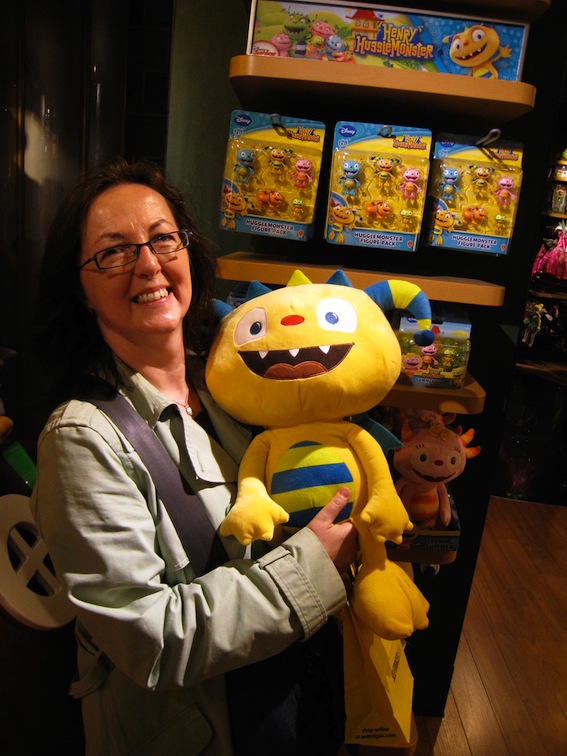
Hugglemonsters!

 Aw! Hugglemonsters on Oxford Street…

We checked the Disney store for our friend Niamh Sharkey’s character, Henry Hugglemonster (raaring away on the Disney Channel near you)

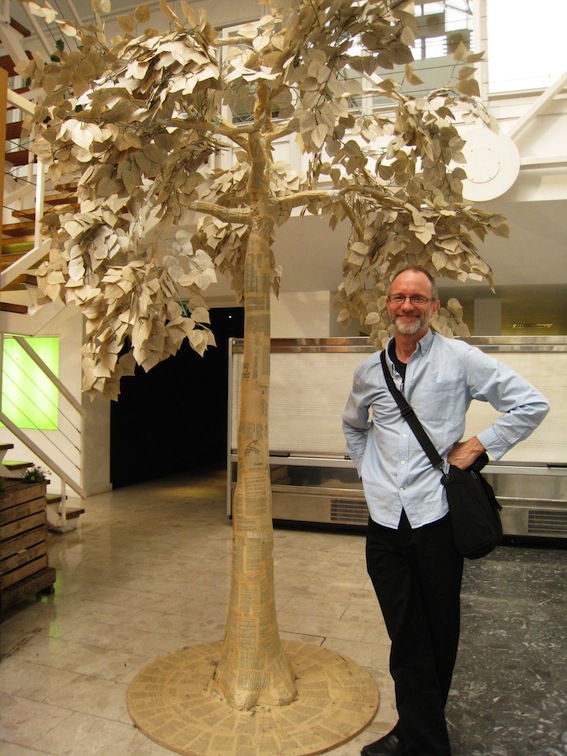
HC tree2A lovely bOOk tree at Harper Collins publishers, where we went to deliver illustrations for Beyond the Stars, a short story collection in aid of Fighting Words, coming out in the autumn

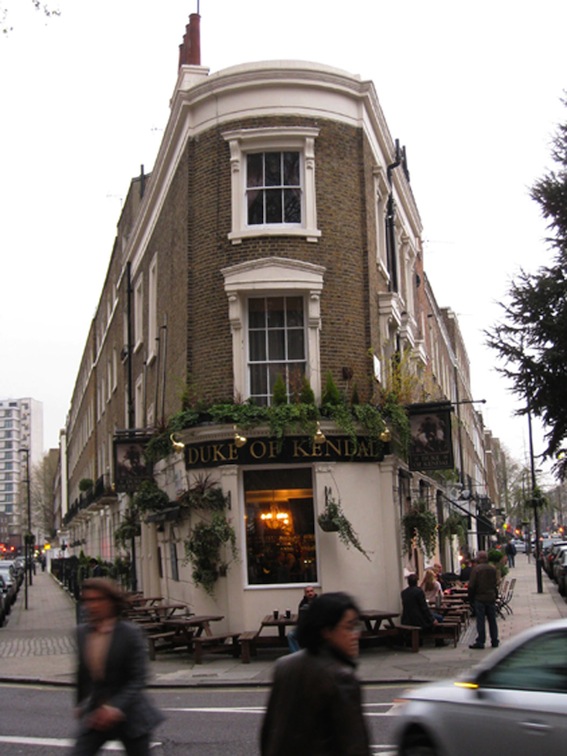
Crooked

LOOkah, it’s crOOkah! Not the Leaning Tower of Pisa, but…

Midnight at the Pollock Toy Museum


toy-museum-1

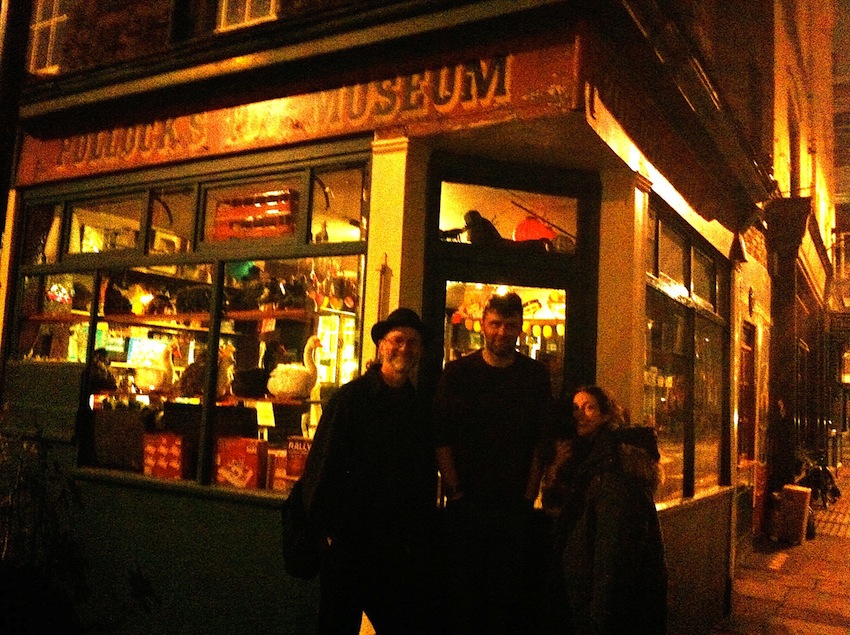
When we were in London at the beginning of April we met up with my cousin Sarah, her boyfriend Eddie and his trusty hound, Haggis. As the pubs in the city close alarmingly early of a Saturday night, at least the dog-friendly ones do, we ended up going back to Eddie’s for a last nightcap. A rather special place to end the evening as it happens, because Eddie runs the Pollock Toy Museum on Scala Street, off Tottenham Court Road.

The Pollock Museum has been in Eddie’s family for three generations and is famous for its toy theatres. I didn’t know about the museum but did remember visiting the Pollock Shop in Covent Garden back in the eighties – when I told Eddie that, he reckoned I’d probably met his dad!

It’s pretty eerie standing inside a shop full of old fashioned toys in the middle of the night. We even got to peek inside the museum itself – a wee peek, as Eddie said the lights were on timers and couldn’t be switched on. Can’t help suspecting that he actually didn’t want us disturbing the toys as the clock struck midnight.

We’ll have to go back and see the whole thing in daylight sometime soon. Apparently there’s a four thousand year old toy mouse…

Toy-Museum-2

Visit The Pollock Toy Museum here

Meeting the Sleeping Giant

Giant1

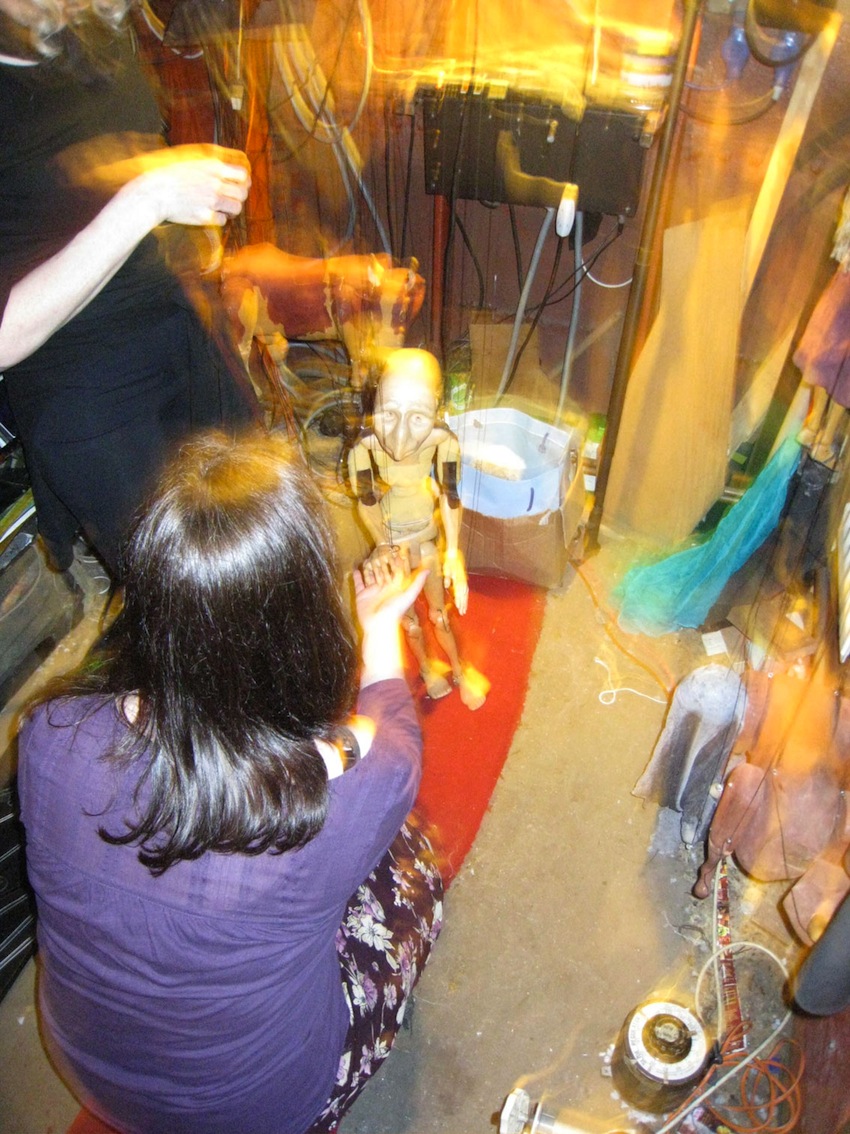
While we were onboard the Puppet Theatre Barge last week I finally got to meet the Sleeping Giant – my cousin Sarah’s version of him, that is. Sarah has been creating puppets for her stage adaptation of my book for a while now. I’ve seen photos but never met her beautiful puppet in person.

Michael captured our meeting on video and you can watch it here –

Visit the Puppet Theatre Barge here 

Drop in on Missfitz Marionettes here

& check out our two previous blogs for more about the Puppet Barge

On Stage, Back Stage

show2

The audience is assembled and the curtain rises. On the little stage of the puppet theatre is… another even smaller puppet theatre!

We watch as an old man plays accordion, a young boy taps out a jig and plays a whistle. Then they (and we) settle down to watch a miniature Punch and Judy show! This is followed by shadow puppets dancing in the light, by glowing mushrooms popping up onstage, by a beautiful sea princess swimming in the waves with a sea witch, by an arrogant wind trying to blow out the moon.

Magic!

And afterwards, when the audience have gone, we get to go backstage and play a little, meet the puppets, and their operators, watch the whole thing being made ready for the next performance.

Read Timeout review of the show here 

Visit the Puppet Theatre Barge here

Drop in on Missfitz Marionettes here

If you like puppets you might like the previous blog, Strings and Things; watch out for another puppet-related bog next week, when we meet the Giant.

Strings and Things


barge1

We’ve visited the Puppet Theatre Barge in Little Venice, London, a few times over the last two years for research purposes (I used the barge as the setting for a novel) and last Saturday we were back on board to catch their latest show and do some filming with my lovely puppet-making, puppet-operating cousin, Sarah

The May Brent is an old barge which has been specially adapted so that the roof can be raised and panel walls slipped into place to create a mini theatre space when the barge is moored. Come on in and have a look around with us…

Tomorrow: the puppet show, both front and back stage.

Visit the Puppet Theatre Barge website here 

Drop in on Missfitz Marionettes here

If you’d like to share this with any puppet-loving friends, there be buttons: