A Bit of the Old Sod…in Old Salem.

One sunny day in January we walked around the graveyard in Salem, peering at the carvings of skulls and angels on the stones. As always it’s age-at-time-of-death that catches your eye: infants and teenagers, a rare octogenarian. But this graveyard also holds the remains of the witch trials’ judge, John Hathorne (great-great-grandfather of Nathaniel Hawthorne) who unlike some of the other judges, never repented his actions.

On the other side of the graveyard wall is a memorial to those killed in the witch trials, including Elizabeth Howe from Michael’s hometown of Ipswich, and Giles Corey, ‘pressed to death’. It’s impossible not to be moved by the quiet simplicity of the memorial and the horror it represents.

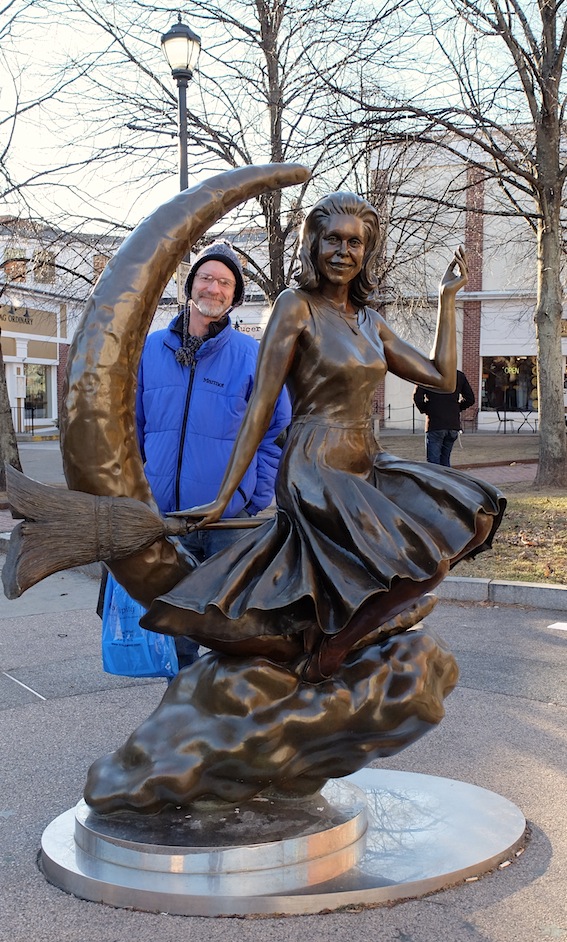
Salem town is  a good place to visit in winter – excellent coffee shops, a fantastic museum (the Peabody) and hardly a tourist (other than ourselves) about. And then there are all the interesting wee shops in the town. A great comic shop we lost at least an hour in, a cute pet shop (The Barking Cat), a shop for Austenites (which unfortunately wasn’t open), and loads of ‘Magic’ shops. Some are very much aimed at the tourists but others are serious witchcraft shops, full of fascinating books (if you happen to be a witch or a children’s writer) and stuff for curing and fixing.

It was minus 12 outside and we seemed to be the only shoppers in town that day, so I suppose we shouldn’t have been surprised at the sour look we got from an owner when the first thing we did on walking into her shop was burst out laughing. We couldn’t help it. Right inside the door was a table loaded down with PEAT BRIQUETTES.

Machine cut and pressed…broken into individual bricks… each with piece of ribbon tied around… labelled ‘Piece of Ancient Irish Bog’… $6.

We swallowed our sniggers and wandered around the dark shop. There was a glass case full of beautiful hand-carved wands which would have been at home down Diagon Alley in Ollivanders’ wand shop. I itched to take a photo but remembered my manners and asked if it was all right to do so. ‘I’d rather you didn’t,’ came the reply. No smile. ‘No problem,’ I said. ‘Thank you for asking,’ she said. But still no smile. I couldn’t really blame her for not smiling; she must have been bored silly sitting in a cold shop all day with no customers. I wandered off to look at some herbal remedies.

‘They sell them in gas stations in Ireland,’ Michael said to the woman. She stiffened.

‘In gas stations,’ said Michael. ‘You know, with bags of coal and logs. We burn them.’ The woman’s eyebrows shot into her hair.

‘He means the peat briquettes,’ I said, suddenly tuning in to what was going on.

‘What?’ she snapped.

‘He’s talking about the turf,’ I said. ‘Not the wands.’

I didn’t dare laugh. At least not until we were half way back to Ipswich.

DSCF1134


Basket Case

DSCF1336

Just back from windy wilds of Connemara where I did a four day course in traditional Irish basket weaving with Ciaran Hogan. I’d made a basket once before – strongish but bockety and a wee bit on the holey side – so my aim this time was to learn to do a better shape and weave.

Ciaran’s a great teacher, very clear, very patient, and generous with his time and energy. We were a class of just seven and he let us go our own way and make different things. Two of the seven had done courses before and they tackled more difficult projects than the rest of us, Ben making an oval shopping basket, Eddie trying his hand at a creel (turf baskets which used to be strapped across donkeys in pairs).

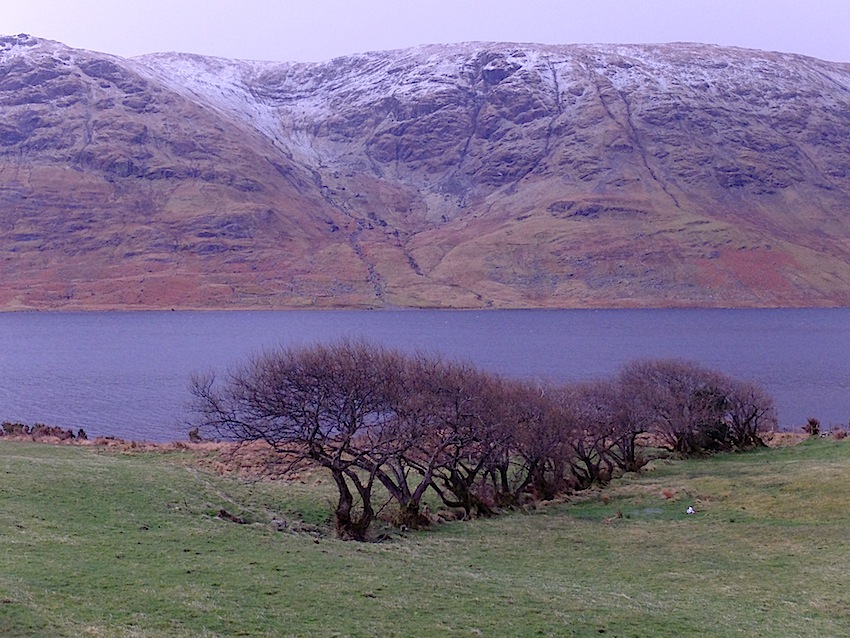
The workshop and (lovely) accommodation are beside scenic Lough na Fooey. The weather pretty much changed on the hour – sunshine, rolling mists, drizzle, sleet and snow. Mobile reception was zero, except for some sweet spot down the road at some wall I never did locate, and the internet was slow. The mountains blocked out the world (which felt good) and the weaving blocked out all of my brain’s incessant inner chatter (even better). It was sort of like meditation with something beautiful and useful to take home at the end!

For larger photos and snippets of info about the basket making click on the first photo and continue clicking the right arrow.

Ciaran runs 4 day courses in Loch na Fooey several times a year, as does his father, master craftsman Joe Hogan. Ciaran also runs 2 day non-residential courses at his workshop at The Craft Village (Ceardlann) in Spiddal.

You’ll find info on his lovely baskets and the next available course here: http://www.ciaranhoganbaskets.com/

And you can see examples of Joe Hogan’s amazing creations here:   http://www.joehoganbaskets.com/portfolio/artistic-baskets/    I guarantee you’ve never seen the like before!

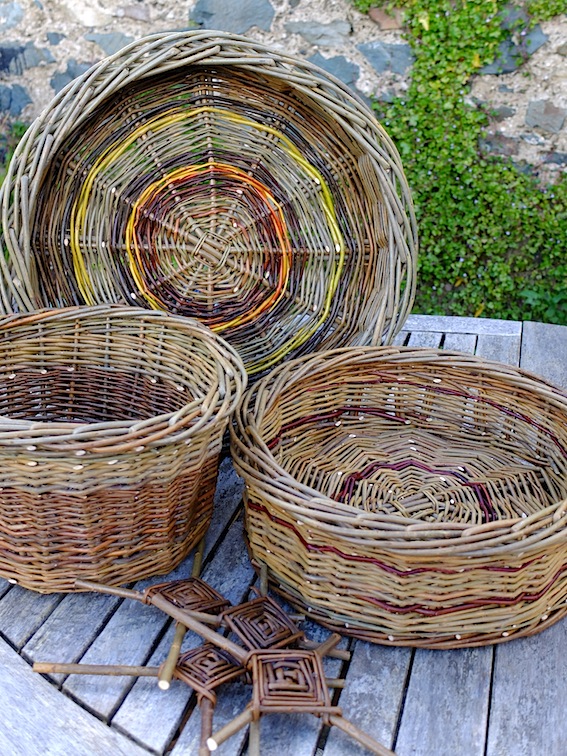
Below are the baskets I came home with. Delighted with them and will definitely be doing another course sometime soon.

DSCF1395

Normal Service…

…will recommence soon! We’ve been in the USA for five weeks and now that we’re home again we are chasing paperwork and mini deadlines. Two blogs to watch out for soon are one on the Carle Museum and one on Salem.

DSCF1076

In Ed Emberley’s Studio

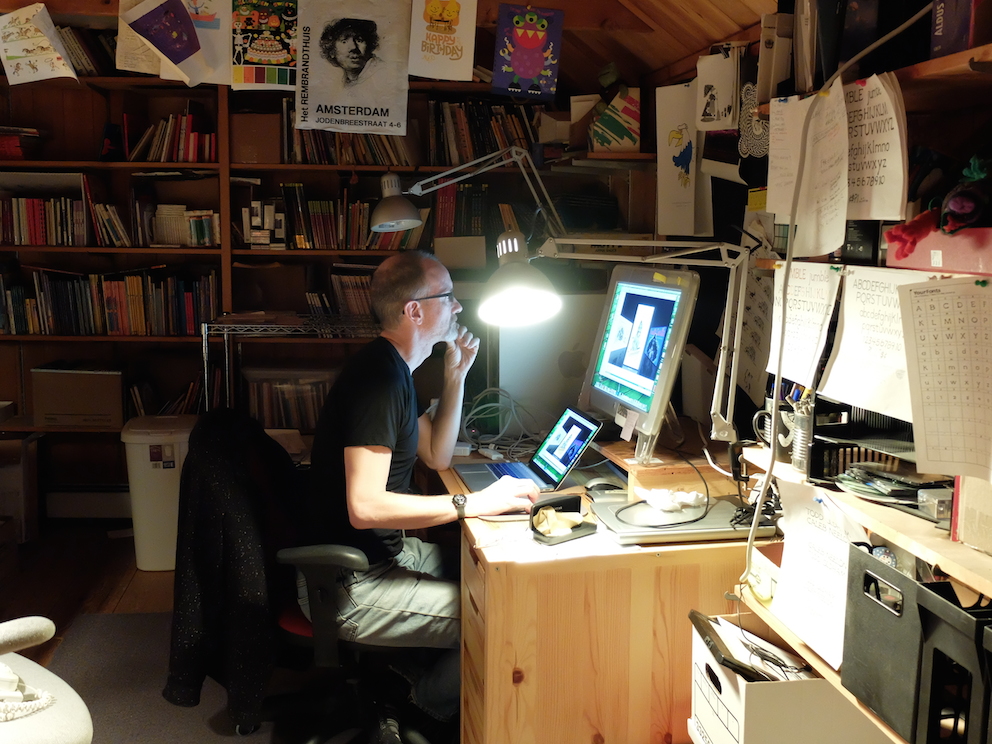
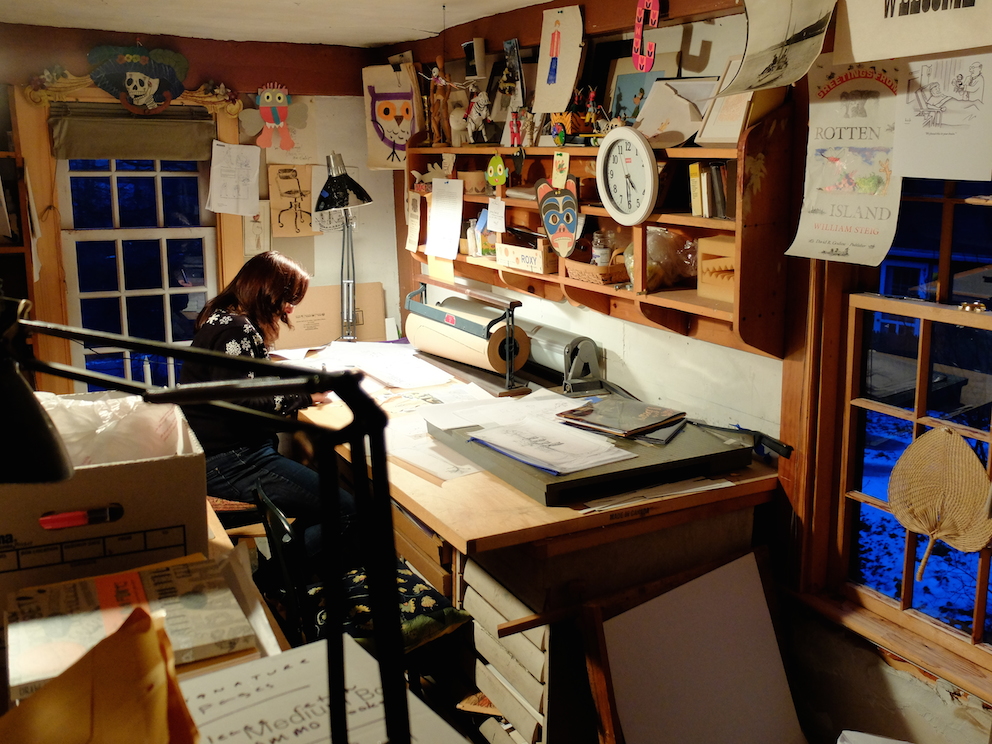
DSCF0891 DSCF0967We’re in the US for a fairly long visit. Both of us need to get some work done while we’re here and Ed has kindly lent us his studio spaces. Top photo is Michael at work in Ed’s computer room, bottom photo is me sketching in Ed’s studio, snow on the ground outside. Both rooms were Michael’s bedroom at some point in his childhood!

Ed has worked in this house for over fifty years creating some of his most famous books and like all visual artists he has surrounded himself with stuff – images, books,  items which interest him, tools of the trade. The photos below will give you a taste of the space – watch out for a couple of family photos lurking in the background, Ed Emberley originals, and a sketch from another famous illustrator.

Fab new book out on Ed Emberley’s art -link here: http://ammobooks.com/products/edemberley

@ the Emberleys’ this Christmas

DSCF0620

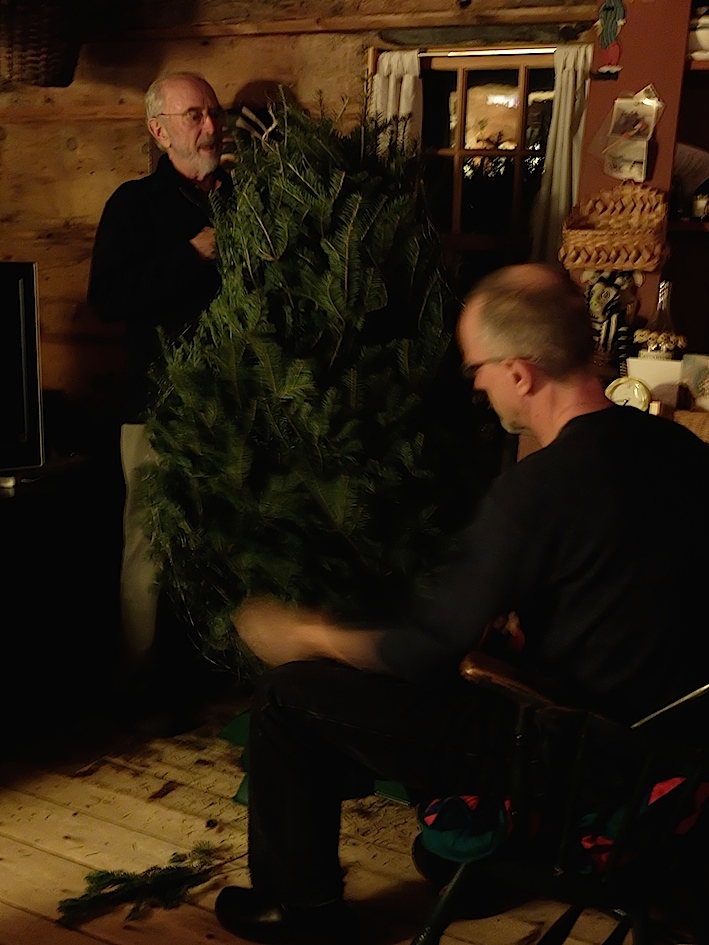
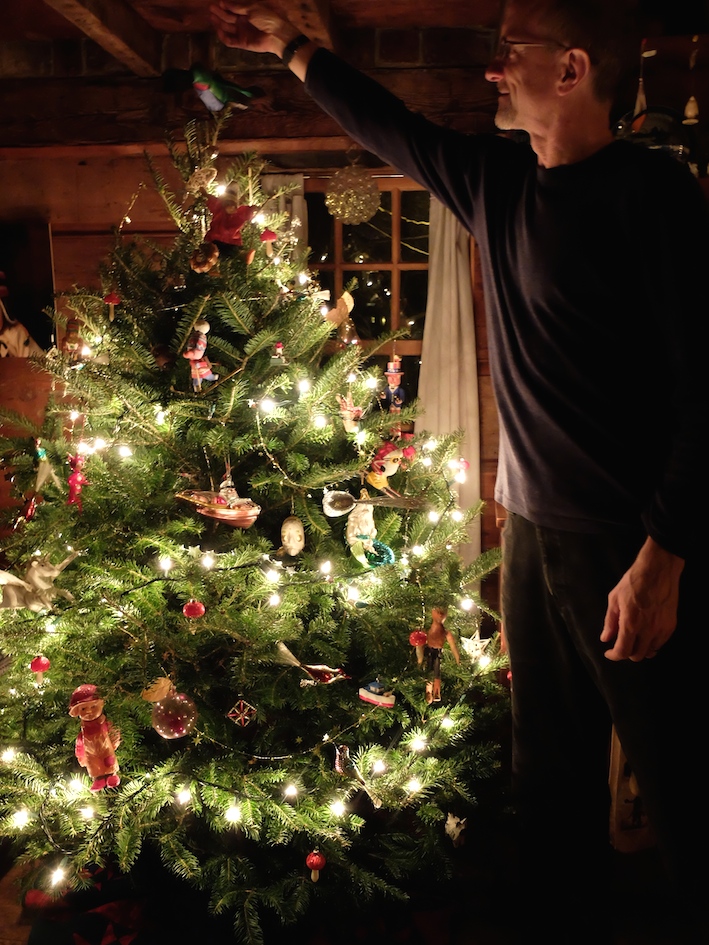
Trimming the tree at Ed and Barbara’s. Many of the ornaments were hand-carved by Ed over the years. Some ornaments commemorate something significant from the year that was, others depict family interests – skiing, cycling, sailing. Aren’t they great?

The selection below include a Pegasus which Michael carved when he was in school.

Season’s greetings to everyone and a peaceful new year.

DSCF0644

Class Glass – Harry Clarke Part 2


St Gormgail the Confessor of Ardoilean and St Keiran

St Gormgail the Confessor and St Keiran

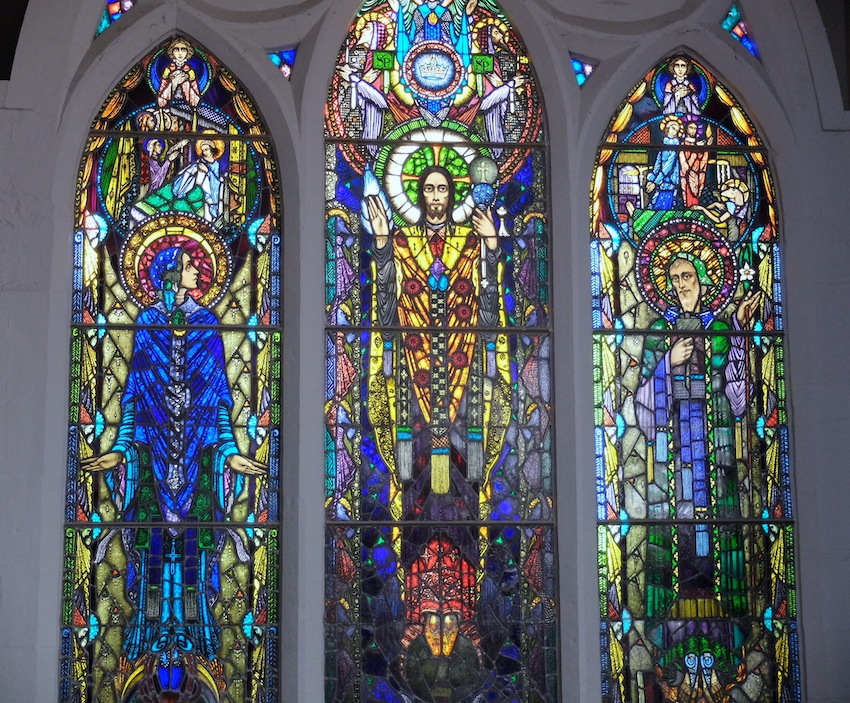
St Mary’s Church in Ballinrobe, Co. Mayo has many windows by Irish illustrator/stained glass artist Harry Clarke. (Link: Harry Clarke 1889-1931)

There are sixteen panels plus a large triple window in the organ gallery showing scenes from the life of Christ and images of Irish saints. The Irish saints are mainly locals and include St Enda of Aran, after whom our (add your own choice of adjective here) Taoiseach must be named. Our camera did an okay job of catching the windows, though it doesn’t do justice to Clarke’s brilliant colours. If you are a Clarke fan then the windows in Ballinrobe and Newport are definitely worth seeking out next time you’re in Mayo. Click on an image for larger image/info.


Harry Clarke -part 1

DSCF0258

In October we did a Once Upon a Place school visit in Cross, Co. Mayo. Afterwards we visited Cong, famous as the village from The Quiet Man. There’s a lovely wee bookshop on the bridge and the owner noticed us looking at a book about the Irish stained-glass artist, Harry Clarke.

‘You should check out the church in Ballinrobe,’ he said. ‘There are a load of his windows there.’ We had to go  through Ballinrobe town on our way back to our B&B so seeking them out was a no-brainer.

‘You know there are some of his windows here in Cong?’ the bookshop man said, almost as an afterthought. And there are. The Holy Family windows, now housed in the ultra modern church in front of the old abbey, where we’d never have thought of looking.

These are the Cong windows. You can walk right up and see this work in all its intricate detail. Click and scroll on the photos for larger images. Shots of the lovely Ballinrobe windows next week.

Click here for info on Harry Clarke, Irish illustrator and stained glass artist, 1889-1931.

Footnote: Mayo claims to have no less than 17 churches with Harry Clarke windows. Windows classified as his can mean they are (a) his design and making (b) his design and he oversaw them being made, or (c) his design/studio. It seems that in the list of 17 Mayo churches there is also (d) – windows by his father, Joshua Clarke. Not sure where the Cong windows fall in the classification, either (b) or (c). They are not on a lot of ‘official’ lists of his work. Watch out for them next time you see The Quiet Man; they are in their original setting. Apparently the Duke was made slow down his walk so Ford could get a good shot of them in the background.

Ogham Stones

The Passage of Stones at University College Cork is exactly what it says on the tin, a passage of … stones! Ogham stones to be exact.

Ogham (I’ve always pronounced it oh-am, but on double-checking also got oh-gam and ah-gam) is an old form of writing in Irish, carved into stones and used in some manuscripts. Earliest examples are 4th century but it was still used in the 9th. The inscriptions on the stones are usually family names. If you click on last three photos there is a translation below.

Links to information on ogham: http://en.wikipedia.org/wiki/Ogham   and http://www.omniglot.com/writing/ogham.htm

Seems there are a couple of good ogham stones lurking in fields in Wicklow.  Any other stone-seekers out there? Any tips for good ones to watch out for? We’re not fussy – any ancient stones will do!  Standing stones, stone circles, cairns, portal graves, celtic crosses, Síle na gig…


Links for Picturebook Makers

Following up the last post – Dear First-time Picturebook Author –  here are the links I promised. 

Great tips from the experts:

Joyce Dunbar  http://www.booktrust.org.uk/books/writing/writing-tips/36/

Mem Fox  http://memfox.com/for-writers-hints/  and then clink on the articles underneath- Quick and Snappy, 20 dos and don’ts, Even more Advice

Malachy Doyle on how not to write a picture book http://picturebookden.blogspot.ie/2014/08/dont-do-it-how-not-to-write-picture.html?spref=fb

Lots of writers give their thoughts on picturebooks to Marilyn Singer:  http://marilynsinger.net/onwriting/what-makes-a-good-young-picture-book/

Emma Blackburn, Bloomsbury:        https://www.writersandartists.co.uk/writers/advice/327/dedicated-genre-advice/writing-for-children/


On writing in rhyme:

http://picturebookden.blogspot.ie/2013/10/to-rhyme-or-not-to-rhyme-by-natascha_3.html?spref=fb                                                                                                      and  http://nosycrow.com/blog/rhyming-picture-books


If you live in Ireland:

Children’s Books Ireland is a great source for info/links and conferences on writing for children: http://www.childrensbooksireland.ie/

SCBWI Ireland is a branch of the huge international organisation. They run courses, conferences etc.   http://scbwiireland.wordpress.com/


A useful book:

The Children’s Writer’s and Artist’s Yearbook. It lists publishers and agents and also has articles on various writerly things. This year’s should be in your local library. https://www.writersandartists.co.uk/store


Also:

Tips for Dummies http://www.dummies.com/how-to/content/writing-childrens-books-for-dummies-cheat-sheet.html

Why are there 32 pages in most picturebooks? Here’s an explanation: http://writersrumpus.com/2013/09/24/why-thirty-two-pages/


B/W photo © Róisín White

Dear First-time Picturebook Author

For any picturebook writers hiding amongst the many NaNoWriMo-ers out there this November, this is a letter cobbled together from my replies to questions I’ve been getting from first time picture book authors. Recently I’ve had a rush of queries, many of which were about commissioning illustrations. My replies are based on 27 years working as a picturebook author; however, the publishing business is changing rapidly and other folk may have different experiences/opinions, so get Googling to see what everyone else says!


Dear First-time Picturebook Author,

The good news is that you do not need to commission your own illustrations. You submit your text to publishers or to an agent who submits it on your behalf. If a publisher takes it, they will match your work to an illustrator, they will deal with the illustrator, they will pay the illustrator. The only publisher I have ever heard of suggesting writers find their own illustrator is An Gúm, the Irish language/government owned publisher, and that was years ago. Occasionally a well-known writer will team up with a well-known illustrator and suggest to a publisher they work on a book together, but that is a different thing altogether.

So forget trying to find an illustrator! It’s the publisher’s job to do that, not yours. That is the way the industry works. And yes, in picturebooks the royalties are split between author and illustrator.

It’s possible you feel your text needs the illustrations to work? Well of course it does! That is completely normal with a picturebook and editors are used to reading texts. You don’t need to /should not add detailed explanations of what you think the illustrations would look like – the illustrator is supposed to be free to react to your text and interpret it. However, sometimes there is something you may need to flag – for instance, the child in the story is playing with a red ball but it is never mentioned in the text. The action of the ball – which we will read visually – forms a vital part of the narrative, hitting things, breaking things, and explains gaps in the text. If your text works this way then do add notes explaining what is happening in the illustrations, but keep them very brief and to the point.

Do you have a strong idea of size/shape of your book, and of the placement of the text? If this is because it is integral to your idea then you should indicate it and why. Otherwise the size and design of book will be decided by the publishers/design editor.

Editors are really big on picturebooks written and illustrated by the same person, so should you have a go at illustrating it yourself? If you are a talented illustrator/artist then I would certainly have a go at illustrating it; otherwise don’t even consider it. (By talented, I mean professional or capable of achieving a professional standard.) Editors like books illustrated and written by the same person because of the cohesion and integration that usually brings to the idea; the author/illustrator is likely to come up with concepts which you won’t get from a writer and illustrator working separately. To this end editors will often encourage illustrators they work with to try their hand at writing, but I have never heard of an editor encouraging a writer who has never shown any artistic ability to try illustrating their own work. Picturebook art, no matter how simple the style, takes a lot of hard work, skill, and time. Some people might take as little as 2 or 3 months to illustrate a book, I take 8 – 10 months, other illustrators take a year or more.

By the way, if you are an illustrator/writer you should produce rough art (simple pencil sketches) for your idea and maybe two finished pieces – don’t do finished art for the entire book. If you find a publisher for it many things will be changed and you may have to do the whole lot again.

The not so good news is that the children’s book industry is awash with people trying to place picturebook texts and novels at the moment. I don’t say that to put you off but to encourage you to concentrate on crafting/writing the best idea and text you can before trying to place it. Just like the illustrations, developing a great text takes time and skill. My earliest books were developed over years and years. Izzy and Skunk took rewrite/re-rough after rewrite/re-rough. It was 7 years before I figured out the right way to end it and finally found a publisher for it. I have no idea how many rejection slips it got along the way, but I did gather up some useful comments amongst the ‘no thank-yous’ which helped me get there. You, Me, and the Big Blue Sea took 9 years of revising and revisiting, which included letting go my (strong) inclination to write it (badly) in rhyme, and realising the book needed to go from portrait shape to landscape. It was finally taken by a publisher who had previously rejected it. Silly Mummy, Silly Daddy was rejected at least 24 times. My niece Beth, heroine of that book, was 2 years old when I got the idea, and 16 when it was finally published. *

These days my skill levels are much higher and I can develop ideas relatively rapidly, but they still take time and attention to get right, I still like to mull them over, let them sit with me a while. And I still get rejections, only now they land in my inbox rather than on the hall floor.

When you have given your idea/text plenty of time and hard work and sweat, and it is the VERY BEST you can possibly make it, take some more time to do your homework about approaching publishers and agents. Most publishers and agents have clear guidelines on their websites setting out what kind of ideas they are looking for/not looking for, and how they like them presented.

Best of luck and happy writing, Marie-Louise

* For clarity’s sake I should say that I got all three of these book ideas in the same year (1992) and developed them simultaneously, while working on my third book, The Long March, doing many, many illustration projects for an educational publisher, and also part-time teaching. I brought the ideas (physically, because that was the norm then) around the publishers in London on two occasions, once in 1994, again in 1998. After that I got an agent and she began showing them after I reworked them yet again. There was a fourth idea which I ditched very early on, and then a fifth, I’m a Tiger Too, which I developed more quickly and which was taken by the first publisher I showed it to. So the development work on each of those early ideas was a month here, a month there, two months here, two weeks there – months and months of work with long gaps inbetween each bout. The long gaps inbetween were at least as important as the periods of actual work because time away from the idea would throw up sharply exactly what wasn’t working and suggest what might. Basically I was developing skills and learning my craft by working and reworking all these ideas; I was finding my personal writing ‘voice’ and also my visual style. At some point everything began to click into place, the ideas were working and publishers began to take real interest.

On Friday I will post links to some organisations, websites and blogs I like and which you may find useful.